Bespoke Chaoshan tours for visitors from Singapore & Malaysia
Chaoshan Nostalgia Across Mountains and Seas: 'Love Letter to Grandma' Scheduled for Southeast Asia, Awakening Roots-Seeking Journey
Chaoshan News / Cultural Roots-Seeking

Chaoshan Nostalgia Across Mountains and Seas: 'Love Letter to Grandma' Scheduled for Southeast Asia, Awakening Roots-Seeking Journey

2026-06-08 Gochinanow Culture Exploration Editor

Dual Experience Guide: Watching the Film and Seeking Roots

The film "Love Letter to Grandma" (Dear You) uses a large amount of authentic Chaoshan dialect dialogue throughout, offering a pure audio-visual feast. After reliving the hometown dialect in theaters, overseas Chinese friends in Singapore and Malaysia can extend the emotion by personally visiting Shantou, Chaozhou, and Jieyang, walking the arcade streets featured in the film, sitting by the courtyard to sip a cup of authentic Gongfu tea, and embarking on a dedicated Chaoshan cultural roots-seeking journey.

##ChaoshanTourism##SingaporeMalaysiaChineseRootsSeeking##QiaopiCulture##LoveLetterToGrandma

Each 'love letter' written to a Chaoshan grandmother is also a 'love letter' written by overseas wanderers to their homeland. Across vast seas and miles, if you hold them in your heart, the distance no longer feels far.

The highly anticipated Chaoshan-dialect word-of-mouth hit "Love Letter to Grandma" will officially land in Southeast Asian theaters including Singapore and Malaysia on June 18. The film uses the profound "Qiaopi" as an emotional bond, vividly recreating the everyday life of Chaoshan such as Gongfu tea and rice dumplings. This tear-jerking film not only awakens the collective nostalgia of overseas Chinese but also sparks a wave of cultural roots-seeking and tourism back to Chaoshan among Southeast Asian communities.

Key highlights

  • Strong Overseas Debut: The phenomenal Chaoshan local film "Love Letter to Grandma" will be released simultaneously in Singapore, Malaysia, Hong Kong, Macau, and other regions on June 18.
  • Qiaopi Culture: With the real history of "Qiaopi" as its core, it recreates the struggle history of ancestors going to Nanyang and the spirit of trustworthiness and commitment.
  • Taste Resonance: The film delicately portrays Gongfu tea, rice dumplings, olives, and emblics, precisely hitting the taste nostalgia of Chaoshan people.
  • Cultural Landmarks: The time-worn arcade streets and traditional clan customs awaken the deep family memories of Southeast Asian Chinese descendants.
  • Roots-Seeking Craze: The light and shadow stories are transforming into real footsteps, driving Singaporean and Malaysian Chinese to embark on in-depth exploration trips to Shantou and Chaozhou.
Amid the interplay of light and shadow, a strong wave of Chaoshan nostalgia is crossing the ocean. The recently acclaimed Chaoshan-dialect film "Love Letter to Grandma," which has swept box offices and moved audiences to tears in China, has officially announced its simultaneous release in Singapore, Malaysia, Brunei, and other regions on June 18, 2026. For the vast overseas Chinese community in Southeast Asia, this is not just a film release date but a cross-century cultural resonance and emotional call.
A Qiaopi Letter Connecting the Bloodlines of Singapore, Malaysia, and Chaoshan
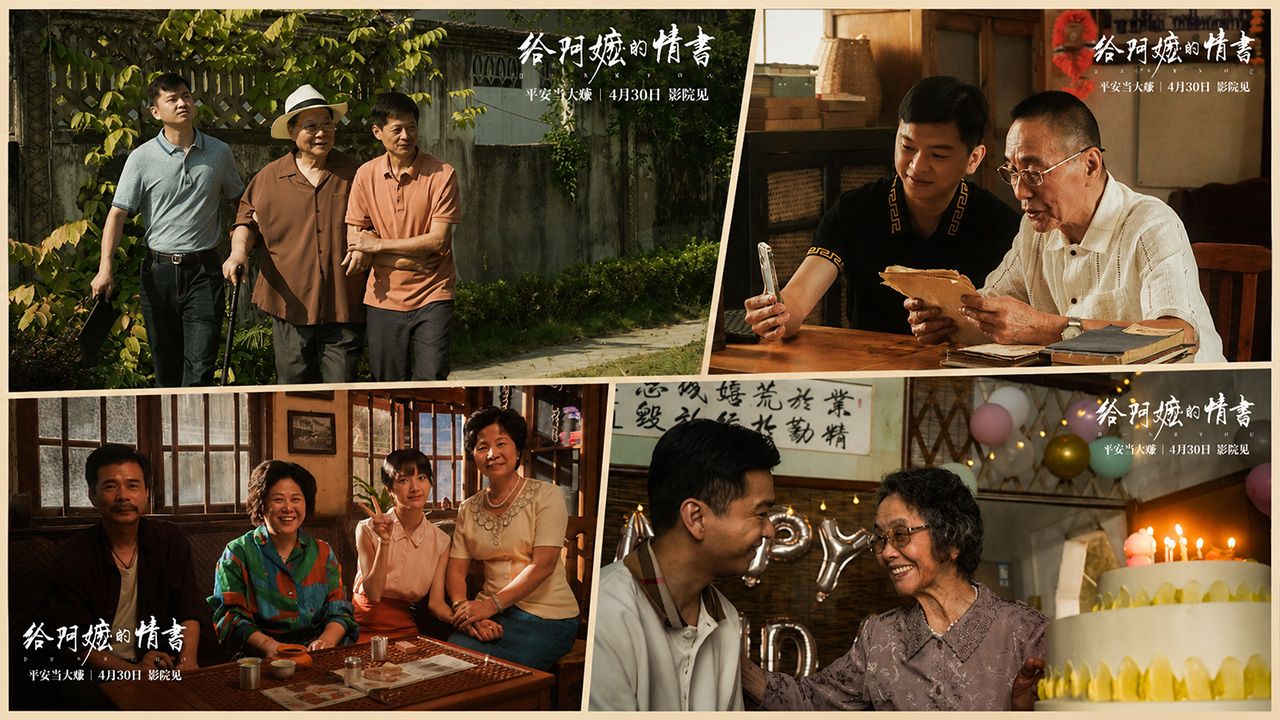
"Love Letter to Grandma" uses a yellowed group photo and a series of "Qiaopi letters" as its narrative thread, telling the touching story of a grandson traveling abroad to find his grandfather. In that turbulent era, countless Chaoshan ancestors, like the protagonist in the film, went to "Nanyang" (Southeast Asia) for a livelihood. With their hardworking and resilient spirit, they took root in foreign lands. Those Qiaopi letters, sent back home with hard-earned money, were not only material support for the family but also the highest symbol of Chaoshan people's emphasis on affection, trustworthiness, and the spirit of contract.
The film does not use dazzling special effects but uses the most simple expressions to narrate the grudges, longing, and watchfulness of two generations. For Chinese audiences in Malaysia and Singapore, the familiar family stories on the screen and the Nanyang struggle history passed down by elders are the true fate epitome of their ancestors.
Everyday Life: Cultural Genes in Gongfu Tea and Rice Dumplings
What truly breaks the emotional defenses of overseas wanderers is the ubiquitous details of Chaoshan life in the film.
In the world of Chaoshan people, Gongfu tea is not just a beverage but a philosophy of life embodying "harmony, respect, refinement, and joy." In the film, the grandmother's calmness as she lights the stove, boils water, and rinses cups alone by the courtyard, along with the warmth of younger generations sitting around sipping tea, perfectly interprets the local culture of "thin tea, thick human feelings." This obsession of "rather go a day without rice than a day without tea" has long been etched into the bones of Chaoshan people.
Beyond the tea aroma, the camera captures the sweet and soft ginger sweet potato soup, the chewy and savory rice dumplings, and the bitter-then-sweet olives and emblics, all telling the survival wisdom of Cantonese people: down-to-earth, passionate, and sweet after hardship. These taste memories need no translation to directly awaken the deep longing of overseas Chinese for their homeland.
From the Big Screen to the Path Below: Embarking on a Chaoshan Roots-Seeking Journey
Once cultural memories are awakened, the desire to seek roots naturally arises.
As "Love Letter to Grandma" continues to heat up in Southeast Asia, the emotions brought by the film are transforming into real footsteps. Many Chinese from Singapore and Malaysia are no longer satisfied with a fleeting glimpse on the screen; they want to personally walk the arcade streets of Shantou's Small Park, touch the traces of history at the Qiaopi Cultural Relics Museum, and eat a steaming bowl of rice noodles at Chaozhou's Paifang Street.
At Gochinanow, we deeply understand the weight of this roots-seeking complex. Our carefully crafted customized Chaoshan roots-seeking tour for Singaporean and Malaysian Chinese will take you deep into the fabric of the film's shooting locations. From visiting ancestral halls in ancient villages to arranging professional Gongfu tea and Chaoshan opera experiences, we are committed to helping you piece together the puzzle of family memories in the most authentic way, making this journey not just sightseeing but a spiritual homecoming.

Further reading