Bespoke Chaoshan tours for visitors from Singapore & Malaysia
"Love Letter to Grandma" Box Office Reversal: The Spirit of Going to Nanyang in a Piece of Qiaopi and a Guide to Root-Seeking in Chaoshan
Root-Seeking Journey

"Love Letter to Grandma" Box Office Reversal: The Spirit of Going to Nanyang in a Piece of Qiaopi and a Guide to Root-Seeking in Chaoshan

2026-05-14 Chaoshan Cultural Tourism Observer

💡 Key Tips for "Going to Nanyang" Root-Seeking Tour

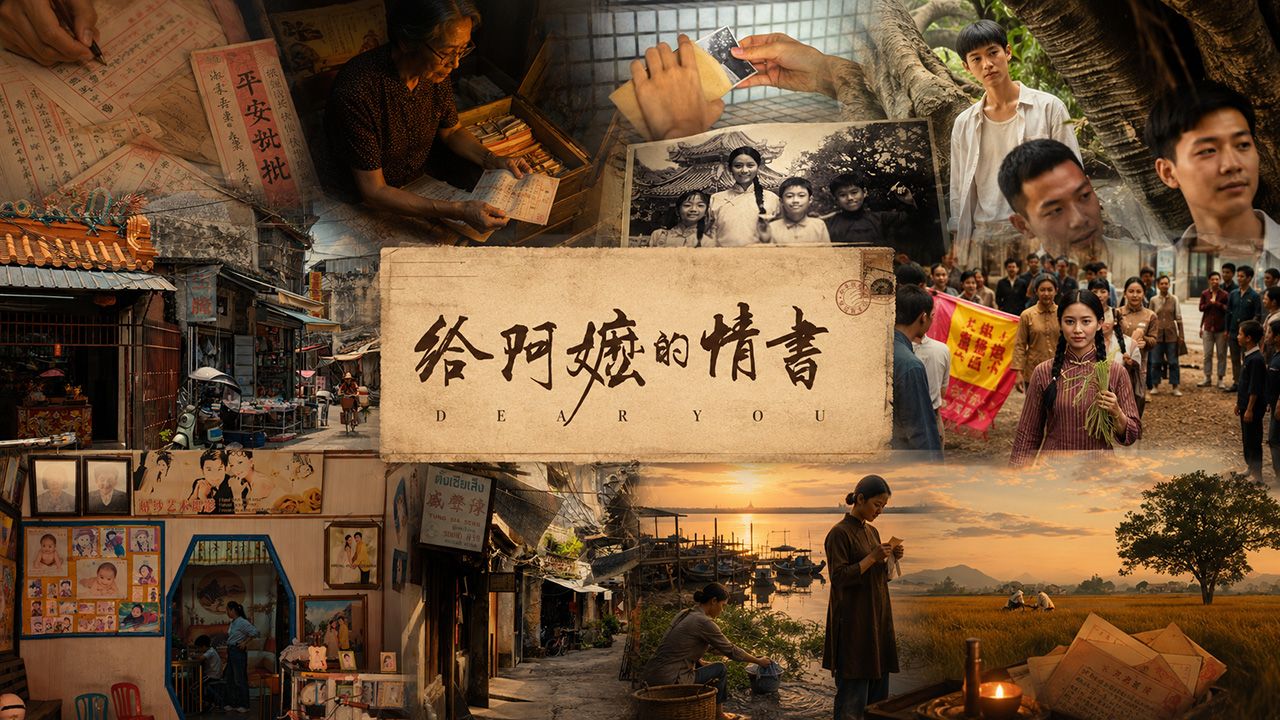
If you or your elders are moved by the story of Musheng, Nanzhi, and Shurou in the film and plan to return to your roots from Southeast Asia, it is recommended to make the Shantou Qiaopi Cultural Relics Museum the first stop of your trip. Here, you can see with your own eyes the real qiaopi (Memory of the World) that crossed the ocean in the film. Then, stroll through the century-old arcade buildings of Shantou Small Park, the film's location, which was the starting point for countless Chaoshan people to "cross the border" and go to sea; finally, go to Chaozhou Thai Buddha Hall to experience the wonderful blend of Chinese and Thai cultures in Chaoshan.

#Love Letter to Grandma#Chaoshan Tourism#Going to Nanyang#Qiaopi Culture#Root-Seeking Journey

"Though Siam is far, the heart is anchored; though the body is near, safety is paramount, and that is reunion." — Excerpt from the family and national sentiment in "Love Letter to Grandma"

Recently, the Chaoshan dialect film "Love Letter to Grandma" directed by Lan Hongchun, with a low production cost of 14 million yuan and no traffic stars, achieved a box office reversal with ultra-high word-of-mouth, with real-time box office exceeding 187 million yuan and a Douban score of 9.0. This article deeply analyzes how the film, through a forty-year "qiaopi" story, reproduces the hard-working spirit of Chaoshan ancestors "going to Nanyang." For many Chaoshan wanderers in Southeast Asia such as Malaysia and Singapore, this film is not only a tear-jerking epitome of the times but also the best cultural guide to start a root-seeking journey in their hometown Chaoshan.

Key highlights

  • Box Office Reversal Miracle: Relying on solid word-of-mouth and sincere production, it reversed from only 1.6% screening share during the May Day period to successfully win the daily box office champion.
  • Real Qiaopi Past: Over 90% of the plot originates from real overseas Chinese history, vividly restoring the "short paper, long love" of maintaining family ties through cross-ocean letters in the 1950s.
  • Authentic Chaoshan Scenery: The crew filmed on location across Shantou Small Park, Chaozhou Thai Buddha Hall, and Jieyang Mianhu, presenting the original Chaoshan humanistic landscape.
  • Tribute to the Spirit of Crossing the Border: Deeply portrays the protagonist's struggle to make a living in a foreign land (Siam) and give back to his hometown, interpreting the foundation of Chaoshan people's honesty, trustworthiness, and hard work.
  • Triggering Root-Seeking Resonance: The local accent and nostalgia in the film hit the tear points of countless overseas Chinese, rapidly driving a new cultural tourism trend of "following the film to tour Chaoshan."
"Good creation, sincere expression, can ultimately be seen." In the 2026 film market, a Chaoshan dialect film "Love Letter to Grandma" (also known as "Love Letter to Grandma") with a cost of only 14 million yuan, zero sponsorship from major studios, and an all-amateur/local cast created an incredible miracle. Not only did it shock the industry with a box office of over 187 million yuan, but it also wrote the most touching cultural tourism business card for the land of Chaoshan with its profound cultural heritage.
  1. The "Sincere Killer" Behind 187 Million Box Office
In the era of traffic supremacy, "Love Letter to Grandma" took the most simple path—telling a story that belongs to "our own people." Director Lan Hongchun delved deeply into the history of Chaoshan qiaopi, casting local actors such as Zheng Runqi, Zhao Shuguang, and Li Shuhao who are well-versed in the life atmosphere of Chaoshan. From an initial screening share of 1.6% to becoming the daily box office champion, word-of-mouth effect (Douban 9.0) and grassroots "organic" recommendations played a crucial role. The success of the film proves that local culture rooted in the hustle and bustle of the market and carrying the true scent of the earth has the emotional penetration to cross circles.
  1. A Piece of Qiaopi, Reliving the Blood, Sweat, and Struggles of "Going to Nanyang"
The main storyline of the film focuses on grandson Xiaowei traveling to Thailand to find the traces of his "missing grandfather" Musheng, thus uncovering the dust-covered forty-year history of "qiaopi." Historically, due to overpopulation and limited land, countless Chaoshan ancestors were forced to take red-headed boats to "cross the border" (go to Nanyang) to make a living in Siam (Thailand), Malaysia, Singapore, and other places.
"Qiaopi" was their only connection to their hometown. In that era without instant communication, yellowed letters carrying hard-earned money traveled long postal routes back to Chaoshan. These were not only letters to report safety but also lifelines to support small families and even aid the construction of the motherland. The plot of Musheng struggling overseas while caring deeply for his homeland is a true portrayal of the hard work, integrity, and righteousness of millions of overseas Chaoshan Chinese.
  1. Follow the Lens, Start a Cultural Tour of Chaoshan
For travelers planning to visit Chaoshan, "Love Letter to Grandma" provides an excellent "check-in" route. The film covers multiple landmarks with strong Chaoshan symbols: the arcade building complex of Shantou Small Park, witnessing the prosperity of the century-old commercial port and the feedback of overseas Chinese; Chaozhou Thai Buddha Hall, showing the intricate connections between Chaoshan and Southeast Asian culture; and the ancient streets and alleys of Jieyang Mianhu Jiefang Road, preserving the most original market life. Walking among them, tourists feel as if they have entered a parallel time and space of the film, and can encounter a steaming bowl of rice noodle soup at a street corner or hear a friendly local accent at any time.
Conclusion "Love Letter to Grandma" is not just a local film; it is a shared nostalgia memory for all Chaoshan people, and even all Chinese people. For wanderers coming from Southeast Asia such as Singapore and Malaysia, a trip to Chaoshan is never a simple sightseeing tour, but a journey to find the source of bloodline. With respect for the pioneering spirit of our ancestors, come to Chaoshan and see the unchanged starting point of the red-headed boats in the film.

Further reading