Chaozhou Fenghuang Dancong Tea Buying Pitfall-Avoidance Guide: Locals Teach You to Identify Aroma Types and Reasonable Prices
Quick answers
- Reject premium pricing: Recognize the high premium of 'Yashixiang' and try traditional cost-effective varieties like Milanzhang.
- Mountain grade: High-mountain tea (above 600m) has deep flavor, while low-mountain tea (below 400m) only has aroma.
- Key to avoiding pitfalls: If dry tea leaves have a pungent fruity smell, beware of artificially flavored tea.
- Price benchmark: Daily drinking tea is recommended at 300-600 yuan per jin, while top-grade Wudong Dancong starts at over 1000 yuan.
- Seasonal choice: Spring tea emphasizes 'flavor', winter tea (Xuepian) emphasizes 'aroma'.
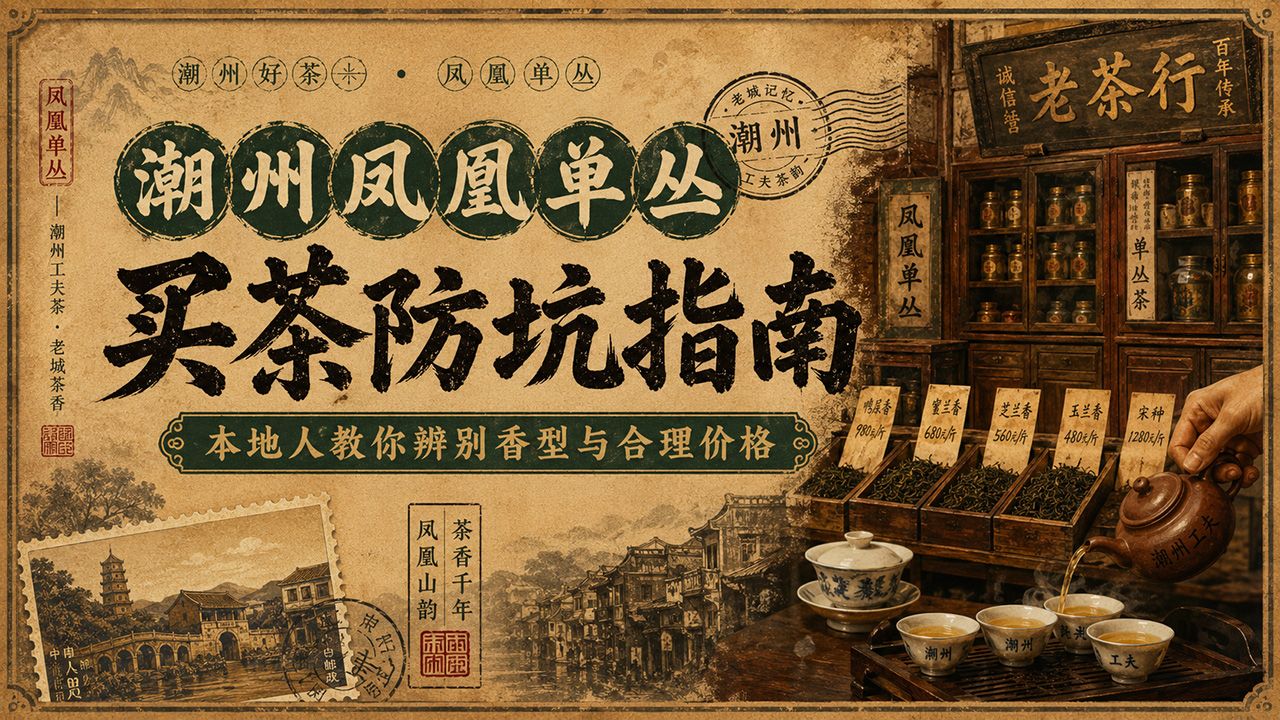
- Don't just focus on 'Yashixiang': The philosophy of avoiding pitfalls in Dancong tea varieties
'Yashixiang' became popular on short video platforms due to its unique name, leading to generally inflated prices in the end market. In fact, Fenghuang Dancong has ten major aroma types. If you seek cost-effectiveness, Milanzhang (with a ripe lychee honey flavor) and Huangzhixiang (gardenia flower aroma) are more substantial choices. When purchasing, if the seller only promotes Yashixiang and the price exceeds 800 yuan per jin without obvious 'mountain charm', please be cautious.
- Mountain field determines the ceiling: High-mountain tea vs Low-mountain tea
In the Chaozhou tea circle, altitude is the lifeline.
Wudong Mountain/Fenghuang Mountain high-mountain tea: Long growth cycle, rich in internal substances. Smooth and sweet taste, high endurance (still flavorful after 10 infusions), with a unique 'mountain charm' (a cool aftertaste deep in the throat).
Low-mountain/flatland tea: Often uses chemical fertilizers for yield, aroma is strong but floating, slightly astringent on entry, basically flavorless after 3-5 infusions.
- On-site tea tasting: Three steps to see through the truth
First, smell the dry tea: Good tea has an elegant aroma. If opening the jar reveals a pungent aroma with an unnatural fruity or milky scent, it's likely sprayed with flavoring.
Second, observe the tea liquor: The liquor should be golden and bright. If it's cloudy, the processing (fixation, rolling) is substandard.
Third, taste the aftertaste: Dancong is somewhat bitter and astringent, but good tea 'turns bitterness into sweetness'. If the bitterness lingers on the root of the tongue and doesn't dissolve, it's a product of low-quality summer tea or chemical fertilizers.
The 'mountain charm' of Dancong and the lively atmosphere of Chaozhou can only be truly appreciated by stepping onto this land yourself. Instead of worrying about being cheated when buying tea in the ancient city and exhausting yourself with research, leave the itinerary to us. Led by local experienced guides, go directly to the source tea gardens of Fenghuang Mountain for an immersive experience of intangible cultural heritage and authentic cuisine, avoiding detours and unnecessary expenses. 👉 [Click here to view your customized 【Chaoshan 3-Day 2-Night Tour Route|Singapore Malaysia Chinese Shantou Chaozhou Small Group Tour】]
Core Dancong Aroma Types and 2026 Market Reference Prices (Simplified Pitfall-Avoidance Version)
← 左右滑动查看完整表格 →
| Aroma Type | Aroma & Taste Characteristics | Beginner Recommendation Index | Suitable Audience | Daily Drinking Reference Price (500g) | Premium High-Mountain Reference Price (500g) |
|---|---|---|---|---|---|
| Yashixiang | Silver flower aroma is very sharp, aroma is high but aftertaste is short, currently the highest market premium. | ⭐⭐⭐ | Young people seeking trendy novelty and influenced by short videos. | ¥400 - ¥800 | ¥1200+ |
| Milanzhang | Rich sweet potato honey and ripe lychee flavor, tea liquor is mellow, aftertaste is deep and long-lasting. | ⭐⭐⭐⭐⭐ | Experienced tea drinkers seeking ultimate cost-effectiveness and preferring rich taste. | ¥260 - ¥500 | ¥800+ |
| Huangzhixiang | Elegant gardenia flower aroma, tea liquor is delicate and smooth, with a fresh 'mountain wildness'. | ⭐⭐⭐⭐ | People who prefer light, elegant taste and dislike strong bitterness. | ¥300 - ¥600 | ¥900+ |
| Xuepian | Cold aroma has strong penetration, very low bitterness, with a unique crisp 'winter charm'. | ⭐⭐⭐⭐ | Aroma enthusiasts, those who fear bitterness in tea, ideal for post-meal degreasing. | ¥400 - ¥700 | ¥1000+ |
FAQ
Q:Why does the tea bought in Chaozhou ancient city taste different when brewed at home?
A:First is water quality; Dancong is best with mineral water or Fenghuang mountain spring water. Second, Chaozhou Gongfu tea emphasizes 'quick brew and quick pour'; if steeping time is too long (over 5 seconds), excessive tea polyphenols will cause bitterness.
Q:What is 'flavored tea'? How to identify it?
A:When rinsing the tea (first infusion), observe if there is a lot of foam that doesn't dissipate, or if the cup bottom retains a chemical perfume smell. Real Dancong aroma 'enters the water'; after swallowing the tea liquor, the aroma emanates from the breath, not just lingering in the nose.
Q:Is tea farmer direct sales really reliable?
A:Don't blindly trust the 'tea farmer' label. It's recommended to choose brands with physical stores in Chaozhou that offer tastings and transparent pricing.