Jinxian Gate
Jinxian Gate is located at the intersection of Xinxing Road in Rongcheng District, Jieyang City, Guangdong Province. It was first built in the first year of the Tianqi era of the Ming Dynasty (1621) and is a rare ancient building combining a city gate, gate tower, and pavilion in one. Named for its connection to the Confucian Temple, meaning "promoting worthy scholars," it is one of the Eight Sights of Jieyang, a Guangdong Province cultural relic protection unit, and an important node on the Jieyang historical and cultural route.
Attractions & culture
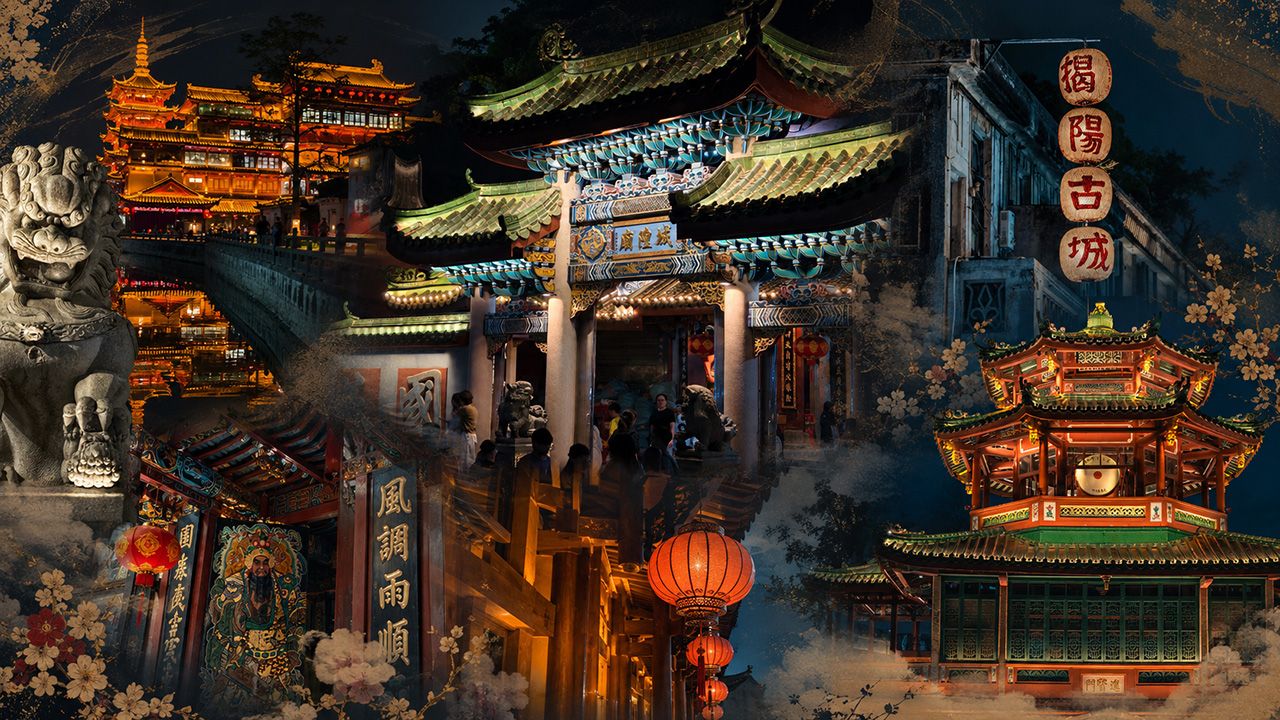
Jinxian Gate is located at the intersection of Xinxing Road in Rongcheng District, Jieyang City, facing east. Its history can be traced back to the tenth year of the Shaoxing era of the Southern Song Dynasty (1140), when it was originally built as an auxiliary building of the Confucian Temple. In the first year of the Tianqi era of the Ming Dynasty (1621), County Magistrate Zeng Yingrui rebuilt Jinxian Gate on the original site to improve the feng shui and traffic of the Confucian Temple, with the meaning of "promoting worthy scholars." Jinxian Gate is a rare three-in-one building in China: the lower level is a barbican gate, the middle level is a gate tower, and the upper level is an octagonal glazed pavilion, with a total height of 16.77 meters, built with pure fir wood structure, four upturned eaves, vermilion railings, and carved beams. Jinxian Gate has undergone many repairs and historical changes. It once served as a place for night watchmen to strike clappers, and the morning horn sound spread throughout the city with the wind, forming the "Dawn Horn at the Watchtower" scene. During the Cultural Revolution, it was renamed "Dongfeng Pavilion" but later restored to its original name. In 2015, it was listed as a Guangdong Province eighth batch cultural relic protection unit. From 2023 to 2024, renovation and reinforcement projects were carried out to maintain the original appearance and structural safety of the ancient building. The Jinxian Gate building has three levels: the lower level is a barbican gate for defense, the middle level is a gate tower for lookout and ceremonial purposes, and the upper level is a glazed pavilion with lattice windows and movable panels, featuring upturned eaves, carved beams, and vermilion railings, presenting an elegant and majestic appearance. In front of the gate, there is a pair of stone lions and sculpted flower beds, complementing the gate tower. Jinxian Gate not only carries the historical memory of the ancient city but also serves as an important node on the Jieyang Ancient City cultural route, connecting historical and cultural attractions such as Jieyang Confucian Temple and Chenghuang Temple. According to folklore, Jinxian Gate once produced "the first seven sages and the later seven sages," and many successful candidates in the imperial examinations passed through this gate, forming a unique cultural imprint. To this day, local parents still take their children around the gate tower inside Jinxian Gate to pray for success in exams, symbolizing "promoting culture and eliminating misfortune."
Travel tips
- Transportation:Visitors from other places can first arrive in Jieyang city center, then take a bus or rickshaw to Jinxian Gate Pavilion; alternatively, take a bus from Jieyang Bus Terminal to Jinxian Gate Station.
- Opening Hours:Open all year round for free visits; during the Spring Festival, there is a shuttle bus route passing through ancient city attractions.
- Ticket:Free admission.
- Travel Tips:It is recommended to wear comfortable walking shoes and pay attention to safety along the way; you can combine visits to Jieyang Confucian Temple, Chenghuang Temple, and other attractions to form a half-day or full-day cultural tour route; please maintain etiquette when photographing architectural details and corner tower eaves.