Chen Cihong's Former Residence
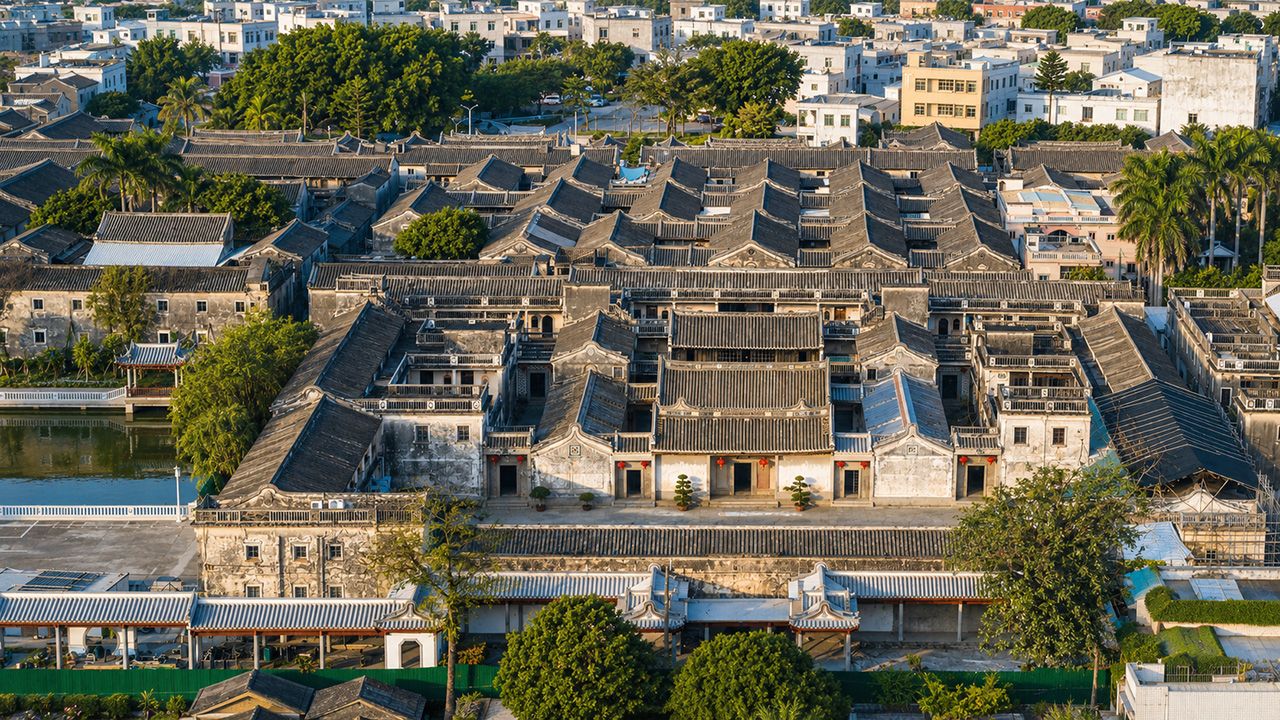
Chen Cihong's Former Residence is located in Qianmei Village, Chenghai, Shantou. Built in 1910, it covers 25,400 square meters with 506 rooms. It adopts the Chaoshan 'Four Horses Pulling Cart' layout combined with a two-story Western-style building, earning it the title 'Lingnan's No. 1 Overseas Chinese Residence'. It is a Guangdong Provincial Cultural Relics Protection Unit and an important site for understanding Chen Cihong's life and Chaoshan overseas Chinese merchant culture.
Attractions & culture
Chen Cihong (1843–1921), also known as Chen Buluan, was born in Qianmei Village, Longdu Town, Chenghai, Guangdong (originally from Qianmei Township, Longyancheng Du, Raoping County). He was a famous overseas Chinese industrialist and financier of the Qing Dynasty, respectfully called 'Uncle Cihong' and 'King of Rice in Siam'. Chen Cihong had exceptional business acumen. In 1855, he left school to engage in business, accompanying his father Chen Huanrong to Hong Kong to manage the Qiantailong Firm. Before the age of twenty, he took over his ailing father's business in Hong Kong. In 1871, he went to Bangkok, Thailand, to establish the Chen Hongli Firm, engaging in rice import and export trade. Later, his business expanded to Singapore, Saigon (Vietnam), and Hong Kong (China), building a transnational trade network. The Hongli Firm he founded grew into a multinational enterprise group covering industrial and commercial trade, finance and insurance, shipping, and real estate. Before World War II, the group was hailed as 'the top Thai-Chinese conglomerate', and in the Chaoshan region, there was a saying, 'No one is richer than Uncle Cihong.' He was also passionate about public welfare and education. In 1903, he returned to his hometown, leading the construction of roads and bridges and the dredging of irrigation canals. In addition, he single-handedly founded 'Chengde School', the first overseas Chinese-run school in eastern Guangdong, contributing to the development of education in his hometown. Chen Cihong's Former Residence is located in Qianmei Village, Chenghai, Shantou. Built in 1910, it covers 25,400 square meters with 506 rooms. It adopts the Chaoshan 'Four Horses Pulling Cart' layout combined with a two-story Western-style building, earning it the title 'Lingnan's No. 1 Overseas Chinese Residence' and it is also a Guangdong Provincial Cultural Relics Protection Unit. Chen Cihong's Former Residence is one of the most representative historical buildings in Chenghai District, embodying the perfect integration of traditional Chaoshan residential architecture and Lingnan-style Western buildings. The layout is rigorous and spacious, with courtyards, halls, and corridors arranged in a well-proportioned manner, showcasing the living pattern of an overseas Chinese merchant family while preserving rich historical and cultural elements. The exquisite wood carvings, brick carvings, and stone carvings inside and outside the residence cover themes such as historical stories, family culture, and natural landscapes, making it a valuable artifact for studying Chaoshan architectural art and overseas Chinese merchant culture. Visitors can stroll through the courtyards, appreciate the architectural details, and learn about Chen Cihong's life and his contributions to hometown education and public welfare. Chen Cihong's Former Residence is not only a historical and cultural heritage but also an important representative of Chaoshan residential architectural art.
Travel tips
- Transportation:From downtown Shantou, take a taxi/Didi or bus for about 40 minutes to reach Chen Cihong's Former Residence in Qianmei Village, Chenghai.
- Opening Hours:Open daily, recommended visiting hours from 9:00 AM to 5:00 PM; may vary slightly on holidays.
- Ticket Price:Adult ticket approximately 30 yuan, with discounts for students and seniors.
- Photography Tips:Morning or afternoon light is soft, ideal for capturing panoramic views of the courtyards and architectural carving details.