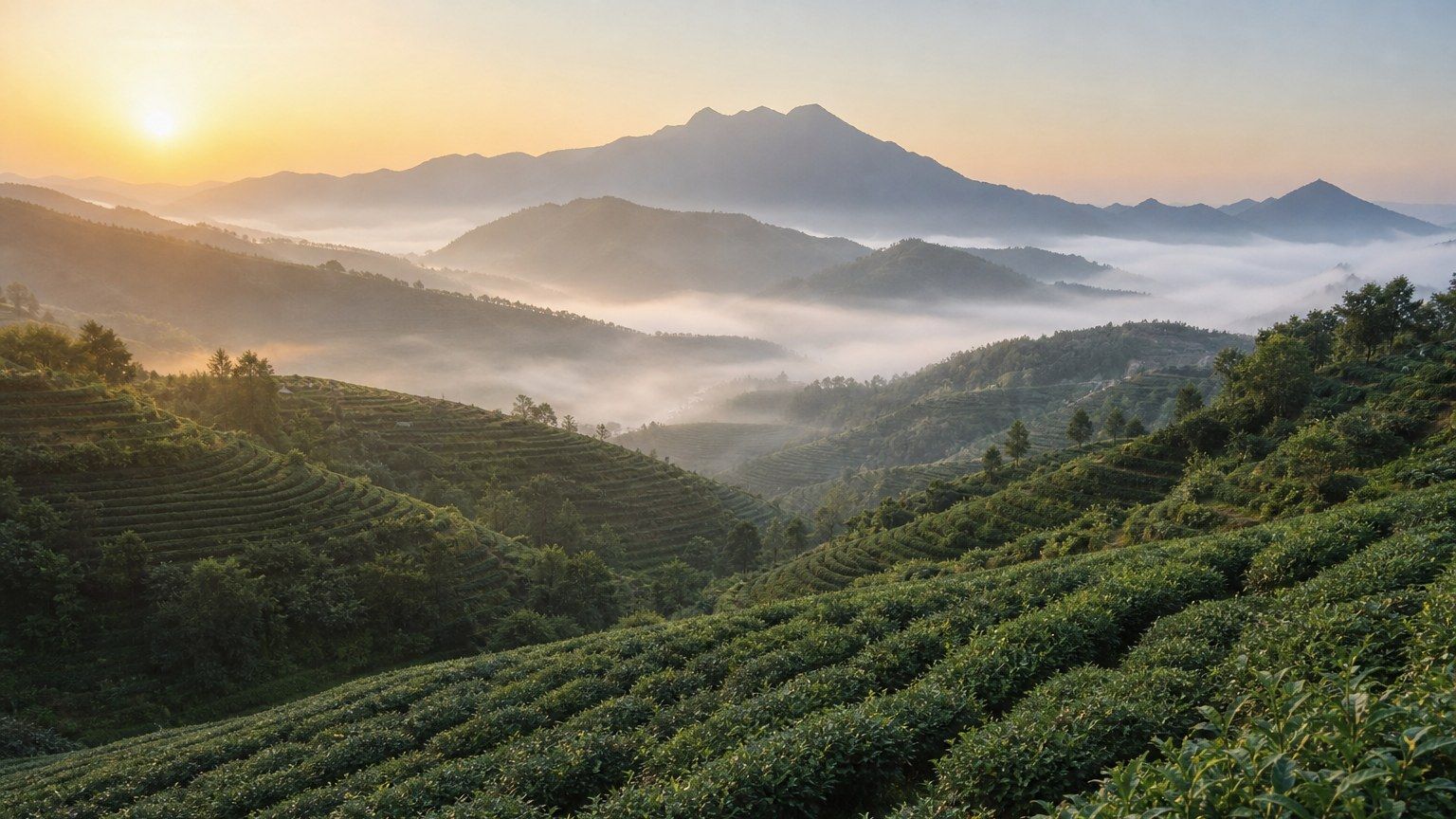
Almost everyone who visits Chaozhou brings home a packet of Fenghuang Dancong — it is a gracious gift for parents and colleagues, and a fine tea to drink yourself. It is also the easiest Chaoshan specialty to buy wrong: the aroma-type names are hard to remember, blends get passed off as single-bush tea, and plenty of people pay high-mountain prices for low-mountain leaves.
This guide skips the mystique and covers three things you can use immediately: how to choose an aroma type, what to look for when tasting, and what a catty (500 g) should actually cost — plus the most common tricks, spelled out. By the end you should be able to follow a tea shop conversation and ask about prices with confidence.
The short answer: decide the purpose first, then the budget, then the aroma type. The right order is to work out who will drink the tea and when, set a budget, and only then choose an aroma. Get the order wrong and a list of aroma names will carry you upward in price. Three reference points: for everyday drinking, RMB 150–400 per 500 g already buys a good mid-mountain Fenghuang spring tea; for gifting parents or clients, RMB 600–1,500 per 500 g is generous without being extravagant; for famous and old-bush teas, RMB 2,000+ is only the entry point — at that level you really need expertise or a trusted guide, and otherwise you are better off buying two mid-range teas with the same money. One more tip: do not buy only one kind the first time. Split the same budget across two or three aroma types, 250 g each, and compare at home.
What Fenghuang Dancong is, and why it is called "single bush". Fenghuang Dancong is an oolong from Fenghuang (Phoenix) Town in Chao'an District, Chaozhou, Guangdong — semi-oxidised and famous for the range of its aromas. It is the tea most often used for Chaoshan gongfu tea. The name "dancong" (single bush) comes from its history: growers selected exceptional individual bushes from the Fenghuang Shuixian population, then picked, processed and stored each one separately — "single bush", later "single bush cluster". Most tea sold today is vegetatively propagated from those named cultivars, but the aroma-type and dancong naming has stuck. One easy confusion: Fenghuang Dancong is not Lingtou Dancong. Lingtou Dancong comes from Raoping County in Chaozhou — a different production area and cultivar, mostly honey-orchid aroma, and a good tea in its own right. Yet it is often sold as "Fenghuang Dancong" at Fenghuang prices. This is the most common origin mix-up in the market.
Choosing an aroma type: start with three of the ten. Fenghuang Dancong is said to have ten aroma types: huangzhi (gardenia), zhilan (cymbidium), milan (honey orchid), guihua (osmanthus), yulan (magnolia), jianghua (ginger flower), yelaixiang (tuberose), moli (jasmine), xingren (almond) and rougui (cinnamon). The names describe the aroma, not additives. Beginners need only three. Milan (honey orchid) is the most mainstream and highest-volume: honeyed sweetness with orchid notes, the most widely liked and usually a first dancong for most drinkers — and because the cheapest and most expensive milan differ so much, it is ideal for practising price comparison. Huangzhi (gardenia) is bright and clean with a high, distinctive aroma — the flavour many people remember from their first dancong. Zhilan (cymbidium) is delicate and refined with a long floral finish, more restrained than milan and a favourite of those who prefer elegance. Others worth noting: xingren (almond, locally "juduozi"), jianghua (ginger flower, "tongtianxiang"), rougui (cinnamon) and guihua (osmanthus) — all clearly different, good as your second or third purchase.
"Yashi xiang" is not an insult: where the name comes from and how it tastes. "Yashi xiang" — literally "duck droppings aroma" — is the most famous and most often overpriced dancong. It is neither dirty nor foul: it is a cultivar of the huangzhi (gardenia) aroma family, originally from Pingkengtou Village in Fenghuang Town. Legend has it the bush was so fragrant that its owner, afraid of thieves, claimed the tea was "watered with duck droppings" to put people off — and the name stuck. Because it is frankly unrefined, the trade has officially renamed it "yinhua xiang" (silver flower aroma); the two are the same tea. So do not be surprised to hear both names — but if someone uses the renaming as a reason to charge more, walk away. Its actual flavour: mainly silver-flower and gardenia, with a hint of creamy sweetness and a clean, moist mouthfeel. It is sweet on entry with a fast returning sweetness and a bold aroma — very approachable for first-timers, which is exactly why it became famous.
Price range: what a catty should cost. Fenghuang Dancong has the widest price spread of any Chaoshan specialty — the same name covers everything from tens of yuan to tens of thousands per 500 g. Four variables drive it: elevation of the growing site, bush age, cultivar fame, and craftsmanship (oxidation and roasting). Reference ranges (per 500 g, spring tea, indicative only, and they move with the year and the market): low-mountain everyday grade about RMB 80–250; Fenghuang mid-mountain spring tea about RMB 250–600; high mountain (above 800 m, such as the Wudong area) about RMB 600–1,500; premium famous-cultivar and old-bush teas usually RMB 1,500 and up, with century-old named bushes reaching five figures. One practical note: "xuepian" (snow flake), the last flush picked around the start of winter, is highly aromatic with decent volume and typically 30–50% cheaper than the same cultivar's spring tea — a sensible choice if you love aroma on a budget. But "xuepian sold at Wudong high-mountain spring prices" is plainly unreasonable. Keep one bottom line: a genuine old-bush Wudong high-mountain tea cannot cost one or two hundred yuan per 500 g. If the price and those labels appear together, put it down.
Tasting in three steps: leaf, lid aroma, number of infusions. No special equipment is needed to screen out most poor tea. First, the dry leaf: tightly rolled, dark brown and lustrous with a substantial feel in the hand. Dead-black, dull, full of broken pieces or crumbling to dust usually means processing or storage problems. Second, the lid aroma: warm the gaiwan, add the leaf, smell the dry aroma, then pour. Good tea is naturally fragrant with layers; if the dry leaf is already sharp and perfume-like, be wary of added flavouring. Third — and this is the most effective step — count the infusions. Low-mountain tea usually fades by infusion 3–5 (aroma gone, liquor thin), Fenghuang mid-mountain spring tea generally lasts 8 or more, and high-mountain old-bush tea still has something at 12–15. The liquor should be a bright golden amber; cloudy or inky is not normal. Check the spent leaf too: soft, springy and clearly rimmed with red ("green leaf with a red border") shows proper processing; stiff, green and without a red edge usually means under-oxidation.
Six common tricks: flavoured tea, blends passed off as single bush, and faked origins. First, flavoured tea: the dry leaf smells aggressive, the first infusion is overpowering, and by the second there is nothing left; the spent leaf has no natural tea fragrance. It is unpleasant to drink and will not age. Second, blends sold as single bush: low-mountain or even non-local leaf blended to imitate a named cultivar. Genuine single-bush tea has a distinctive aroma and body, while blends often taste good for two or three infusions then collapse. Third, faked origins: Lingtou Dancong, Raoping or non-local tea passed off as Fenghuang Dancong, or low-mountain leaf sold as Wudong high mountain — this is where the price gap is created. Fourth, faked age: new tea "aged" with heat and humidity to look like long-stored tea. Genuine aged dancong is deep in colour and mellow-smooth; faked tea often tastes stuffy, sour or scorched. Fifth, weight and packaging games: check whether a "500 g" tin means net weight or includes the tin; metal tins and gift boxes can weigh a lot. Watch the scale for loose tea and read the net-weight label on packaged tea. Sixth, meaningless grades: in the national standard, "special grade" has defined sensory and chemical criteria, but on the market most "special grade" claims are pure marketing. Tasting beats grading every time.
Where to buy: farmers, shops, markets or online. At a farmer's home in Fenghuang Town or Wudong Village, prices are the most honest and you can see the tea mountain — good if you already know something about tea or have a local to take you; the downsides are simple tasting conditions, plain packaging and no easy comparison. Tea shops in Chaozhou's old town and along Paifang Street are the most convenient: sit down, taste slowly, compare several shops in one go — but tourist-area prices run high, sometimes 30–50% above the production area, so visit a few before deciding. Wholesale tea markets such as the Chaozhou Fenghuang Tea Market offer the widest choice and room to negotiate, but suit people with some experience rather than complete beginners on their own. E-commerce and livestreams are convenient and come with reviews, but you cannot see the tea, and relying on copy and photos is risky — buy a 50 g sample first and reorder the larger quantity only once you are happy, and favour sellers with a seven-day return policy and a stated production area. Branded tea companies are consistent, transparently priced and good for gifting, but carry the highest premium at the same grade — you are paying for peace of mind. If you would also like a taste of gongfu tea culture on the trip, start with
Chaozhou gongfu tea at the international tea culture week; to link the tea mountains with the old town, see
A first-timer's guide to Chaoshan.
Storing it, and taking it home. Storage: dancong is a semi-oxidised oolong, so keep it sealed at room temperature, away from light, moisture and strong smells — unlike green tea, refrigeration is not mandatory. Light-aroma or lightly roasted tea can go in the fridge to extend its flavour, while traditionally charcoal-roasted tea actually improves with cool, dry storage at room temperature. Finish an opened pack within six months to a year and decant into a sealed jar. Carrying it home or posting it: tea is a processed agricultural product, and a reasonable quantity for personal use can generally be carried into Malaysia and Singapore; keep the receipt. Use a reputable courier and declare it honestly when posting. Do not carry tea seedlings or plants in soil — these are quarantine items and will be stopped. Rules are set by customs on the day, so check the latest notices from the
General Administration of Customs of China. As a gift, tea has the further advantage of being light and long-lasting; if this trip is about bringing your parents back to Chaoshan, see our
gift list and etiquette for visiting parents.
FAQ. Which aroma type should a first purchase be? Milan is the safest start — the most common and most widely liked. For something sweeter try huangzhi; for something delicate, zhilan. How much is not overpaying? There is no single answer: RMB 150–400 for everyday drinking, 600–1,500 for gifting and 2,000+ for famous and old-bush teas are rough tiers. Judge by the tea in the cup, not the price tag. Are yashi xiang and yinhua xiang the same? Yes — the official name is yinhua xiang and yashi xiang is the older, more familiar one; the flavour is identical. What is the difference between buying online and from a farmer? Mostly verifiability: at a farm you can see the growing site and taste on the spot; online is convenient but depends on the seller's description, which is why a sample pack comes first. How do I spot flavoured tea quickly? Smell the dry leaf for sharpness and see how many infusions the aroma survives — flavoured tea is intensely aromatic once and flat by the second. Does dancong need the fridge? Not necessarily; sealed at room temperature away from light is fine, and only light-aroma, lightly roasted tea benefits from chilling. How much can I bring back to Malaysia or Singapore? A reasonable amount for personal use is generally fine — check the latest rules of both countries. What price is right for a gift to elders? RMB 600–1,500 per 500 g of Fenghuang high-mountain spring tea is a safe range: well presented and broadly appealing.
Putting tea-buying into your itinerary: if you would like to visit the tea mountains above Fenghuang, sit down for a proper tasting in a tea shop, or have a local guide take you through the production area, see our
custom itineraries or
contact us with your budget and who you are buying for.